English
 Español
 Português
 Tiếng Việt
 Türk
 简体中文

Material Elasticity in Cutting Processes
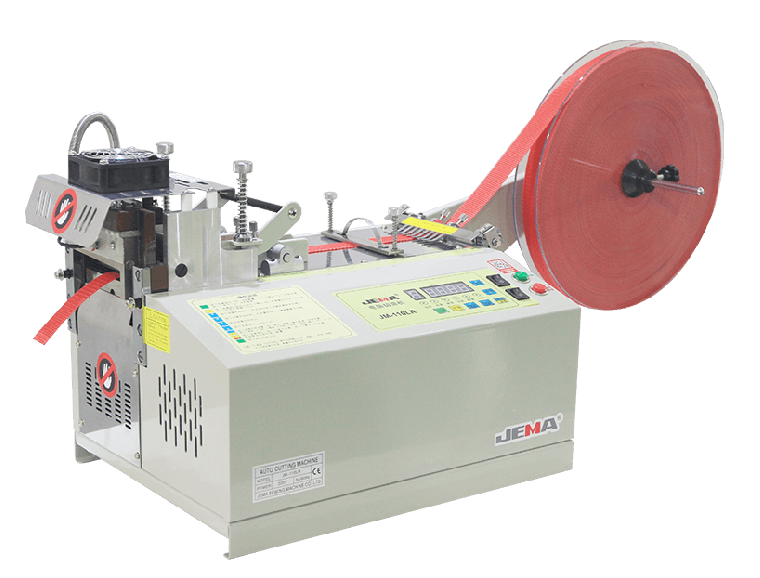
An Elastic Tape Cutting Machine must handle materials with very different stretch behaviors. High-elasticity tapes can stretch significantly under tension, while low-elasticity tapes maintain a more stable shape during feeding and cutting. These differences directly influence cutting accuracy, edge quality, speed control, and machine configuration.
Before adjusting machine parameters, manufacturers must understand how elasticity affects:
- Length consistency
- Feeding stability
- Tension sensitivity
- Edge finishing quality
Proper adaptation ensures precision and reduces production waste.
Characteristics of High-Elastic Materials
High-elastic materials, such as spandex-based tapes or highly stretchable knitted elastics, can extend dramatically under minimal tension.
Key properties:
- High elongation ratio
- Strong recovery capability
- Soft and flexible structure
- Greater sensitivity to pulling force
Challenges during cutting:
- Length Variation
- Slight feeding tension can stretch the tape.
- Released tension after cutting may cause shrinkage, causing inconsistent final lengths.
Material Deformation
- Thin, soft tapes may twist or curl.
- Uneven pressure can distort the shape before cutting.
Edge Sensitivity
- Excessive heat may damage elasticity.
- Mechanical pressure may flatten fibers near the cut edge.
- Because of these factors, cutting high-elastic materials requires careful tension management and precise parameter control.
Machine Adjustments for High-Elastic Materials
When processing highly stretchable tapes, operators typically adjust the following:
- Low Tension Feeding
- Use pulling force.
- Install tension control rollers to stabilize material flow.
Accurate Length Calibration
- Compensate for elastic shrinkage after release.
- Test sample pieces before mass production.
Controlled Cutting Speed
- Slower speeds reduce sudden pulling forces.
- Improves consistency in soft materials.
Optimized Blade or Heat Settings
- Lower heat levels prevent melting or stiffness.
- Sharp blades reduce compression.
- These modifications help maintain dimensional stability and protect material performance.
Characteristics of Low-Elastic Materials
Low-elastic materials, such as woven polyester elastics or heavy-duty industrial straps, exhibit limited stretch and stronger structural rigidity.
Typical features:
- Minimal elongation under tension
- Firm and stable structure
Higher density
Better dimensional consistency
Advantages during cutting:
Stable Feeding
Less sensitive to pulling force.
Easier to maintain uniform length.
Improved Precision
Reduced risk of shrinkage after cutting.
More predictable dimensional outcomes.
Stronger Edge Structure
Less curling or deformation.
Suitable for higher cutting speeds.
Low-elastic materials generally allow smoother operation with fewer adjustments.
Machine Settings for Low-Elastic Materials
When using an Elastic Tape Cutting Machine on low-elastic tapes, settings may differ significantly from high-elastic processing:
Higher Feeding Speed
- Stable materials can tolerate faster throughput.
- Increases productivity.
Stronger Clamping Pressure
- Reduces vibration during cutting.
- Ensures clean edges on thicker tapes.
Higher Cutting Force
- Suitable for dense or multi-layer materials.
- Maintains straight cut lines.
- Less Shrinkage Compensation
- Dimensional control is simpler.
- Requires minimal recalibration.
- These factors make low-elastic materials more forgiving during automated cutting operations.
Edge Quality Differences
Elasticity level also affects edge appearance and finishing:
For high-elastic materials:
- Edges may curl slightly after release.
- Heat cutting must be precisely controlled.
- Overheating may reduce the stretch near the cut zone.
For low-elastic materials:
- Edges remain flatter.
- Mechanical cutting often produces consistent results.
- Less post-processing adjustment is required.
- Understanding edge behavior helps ensure final product quality.
Production Efficiency Considerations
High-elastic materials often require:
- More test runs
- Slower speed settings
- Continuous monitoring of tension
Low-elastic materials allow:
- Faster automation
- Reduced adjustment frequency
- Greater batch consistency
- As a result, overall production efficiency may vary depending on material elasticity.
Adapting to Elastic Differences
The primary difference when cutting high- and low-elastic materials lies in tension control, dimensional stability, and machine parameter adjustment. High-elastic tapes demand careful feeding, precise calibration, and controlled cutting conditions to prevent shrinkage and deformation. Low-elastic tapes provide greater structural stability, allowing higher speed and simplified setup.